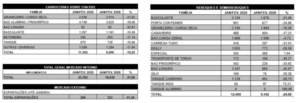
Brazil’s transportation, warehousing, and postal services sector closed 2025 with a GDP of R$ 395.67 billion, according to the National Transportation Confederation (CNT). The sector grew 2.1% while the broader Brazilian economy expanded 2.3%. For 2026, the CNT projects growth of just 0.37% to 0.97%, set against a backdrop of persistently high interest rates and federal infrastructure investment equivalent to a mere 0.13% of GDP.
This isn’t just an economic snapshot. It’s a direct signal to everyone selling to carriers, logistics operators, shippers, and fleet managers: the buyers in this sector have become more selective, more digitally savvy, and far less tolerant of generic sales pitches.
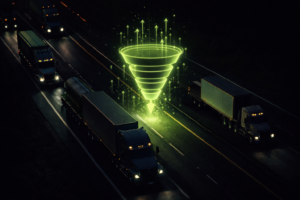
If your sales funnel still operates the way it did in 2022, you’re competing with a strategy built for a different economic cycle — and losing contracts to companies that figured that out before you did.
What Transportation GDP Has to Do With Your Sales Funnel
Everything. The transportation sector’s GDP is derived demand: it expands or contracts based on production decisions, consumption patterns, and investment flows across the entire supply chain. When the sector slows down, decision-makers at trucking companies and logistics operators become more conservative. They approve fewer contracts with new vendors. They demand more justification for every dollar spent.
In 2026, with Brazil’s benchmark interest rate (Selic) at 15% annually and the cost of capital running high — as noted by the CNT — transportation sector buyers are in full evaluation mode. They research more. They compare more. And they take longer to close.
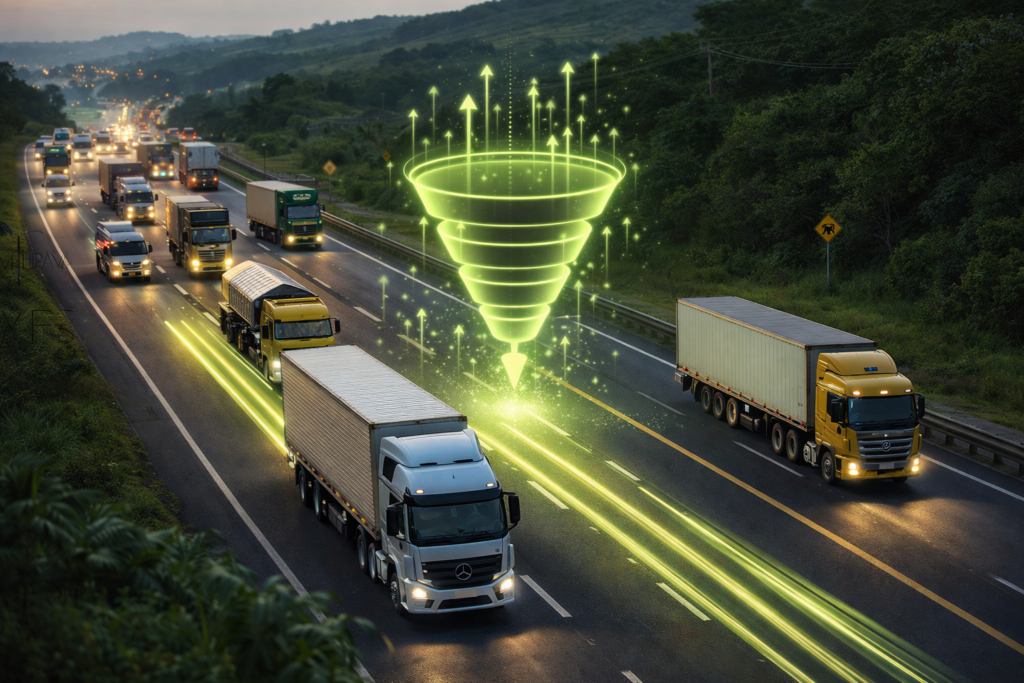
For vendors serving this sector, that translates into one concrete reality: the top of your funnel needs to educate, not just capture. The middle needs to qualify with real technical depth. And the bottom needs to reduce perceived risk — not just quote a price.
Transportation Buyers Start on Google, Not on WhatsApp
The 2026 data is unambiguous: B2B purchase decisions begin with a digital search. Companies that don’t show up on the first page of Google for terms like “logistics solutions provider,” “fleet management software,” or “carrier marketing strategy” simply never make the consideration list.
According to industry analysts, 80% of B2B sales interactions in 2026 take place through digital channels. On top of that, 75% of companies are already using some form of artificial intelligence for lead qualification and appointment scheduling.
In the transportation sector, this pattern is even more pronounced. Logistics directors, fleet managers, and supply chain leads research before they return a single call. If your website doesn’t answer the questions they’re typing into Google, your sales team will never get the chance to speak with them.
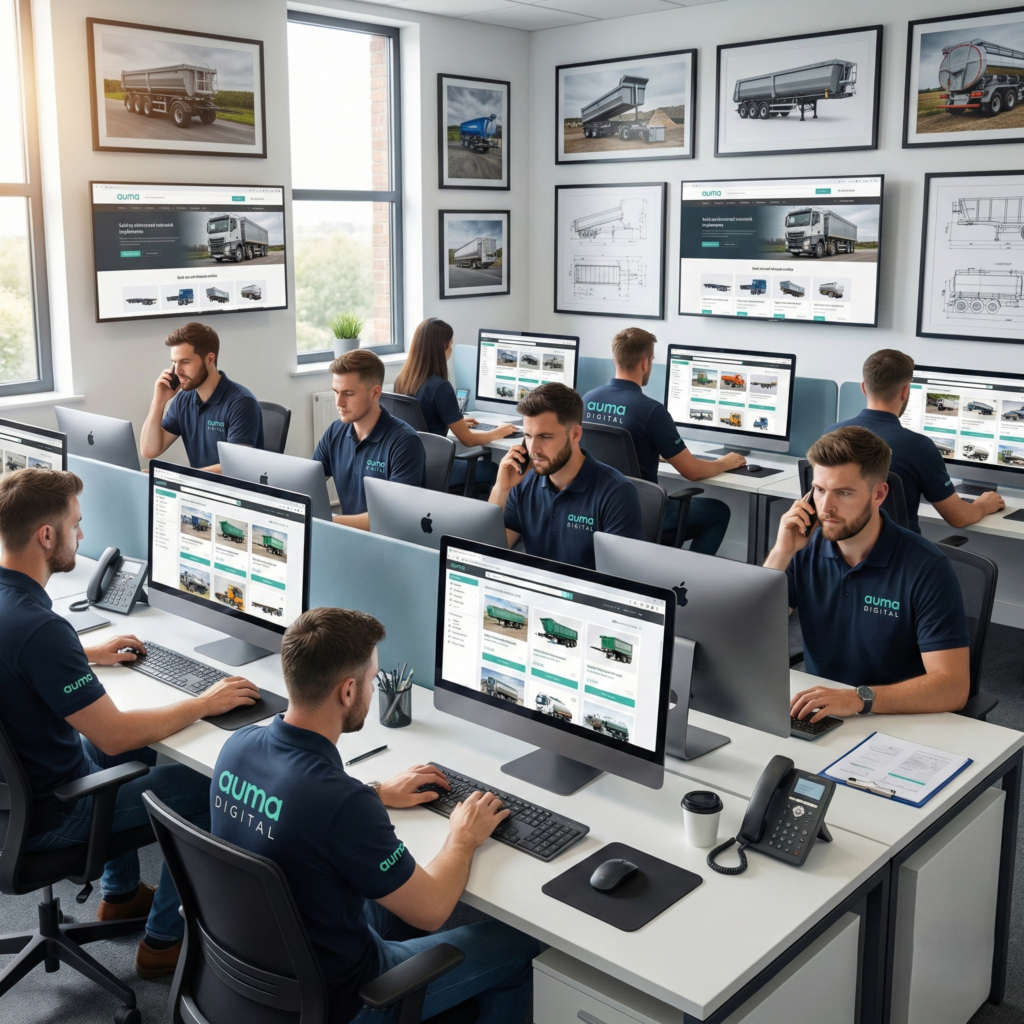
Auma Digital operates precisely at this layer: technical SEO built around the industrial decision-maker’s profile, content that genuinely educates, and the kind of digital authority that shortens sales cycles.
Why the Old Funnel No Longer Works in This Sector
Many companies serving the transportation sector still rely on an outdated commercial model:
- Cold prospecting from purchased lists
- Generic portfolio presentations
- Proposals sent without proper qualification
- Context-free phone follow-ups
This approach ignores a fundamental shift: 44% of B2B decision-makers are now millennials who actively prefer digital self-service, expect immediate answers, and respond only to highly personalized outreach.
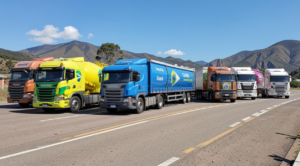
In a market where more than 150,000 active carriers are competing for the same contracts, decision-makers have no patience for proposals that don’t address their specific problem directly.
What actually works today:
- Technical content that educates before the pitch: Industry reports, comparison guides, sector data. Prospects who read your content before speaking with sales arrive better qualified and closer to a decision.
- Journey-aligned SEO: Each stage of the funnel corresponds to a different search intent. Top of funnel: “how to reduce logistics costs.” Middle: “fleet management tool comparison.” Bottom: “specialized carrier vendor.”
- Marketing-integrated CRM: When a lead comes through your website, the sales team needs to know exactly what they read, which page converted them, and what their profile looks like.
- Context-driven follow-up: Not “hey, I saw you visited our site.” Instead: “You read our piece on logistics costs and transportation GDP — it would make sense to talk about how we’ve helped carriers like yours reduce CAC.”
Want to see how this process could work for your business? Request a marketing and commercial strategy diagnostic with Auma Digital.
The Multiplier Effect Most Decision-Makers Never Calculate
The CNT released a figure that most industry players overlook: every R$ 1 invested by the private sector in road infrastructure generates up to R$ 4.77 in transportation GDP within nine months.
The same logic applies to digital marketing. Companies that invest in a qualified digital presence generate up to three times more sales contacts and close contracts at higher average ticket values.
The reason is straightforward: trust gets built before the meeting. When a decision-maker walks into a conversation with your sales team already informed about your solution, the sales cycle shortens. Customer acquisition costs drop. And perceived value increases.
To learn more about structuring your marketing to drive real results in the industrial sector, check out: Industrial Marketing Automation.
The Carriers Growing in 2026 Treat Marketing Like Commercial Engineering
It’s no coincidence that the fastest-growing carriers in 2026 are precisely the ones that have integrated marketing and sales into a single operating system. As the market has made clear, 2026 marks the inflection point for companies that treat marketing and sales as commercial engineering.
That means building around five pillars:
- Data, not instinct: CAC, LTV, CPL, funnel-stage conversion rates. Without these metrics, you have no idea where your pipeline is leaking.
- SEO as a long-term asset: Organic content that attracts decision-makers month after month with no incremental cost per click.
- LinkedIn as the primary B2B channel: Industry data shows that 80% of qualified B2B leads in the logistics sector originate on LinkedIn. Your presence there isn’t optional.
- Segmented lead nurturing: Email flows and communications tailored by funnel stage. A lead who found you through a top-of-funnel blog post should not receive the same message as someone who already requested a quote.
- CRM integration: Marketing hands off leads with full context. Sales receives a real opportunity — not just a company name.
Want to see how Auma Digital applies this model for industrial companies selling into the transportation sector? Talk to our team now.
Follow us on Instagram: @agenciaaumadigital
What to Do Right Now: Align Your Funnel With the 2026 Reality
The window is open — but it won’t stay that way. Transportation sector growth projections for 2026 are modest. Companies that build their digital positioning now will capture the demand that competitors are still chasing with outdated playbooks.
Here are the concrete moves that make an immediate difference:
- Audit your current funnel: Where are leads coming from? At which stage do you lose the most? What is your CAC by channel?
- Produce sector-specific technical content: Articles on transportation GDP, logistics cost management, fleet operations, regulatory compliance. This is the content decision-makers are searching for before they buy.
- Build an intelligent CRM infrastructure: A lead without an interaction history is a lead without context. Consultative selling requires data.
- Invest in decision-maker-focused SEO: The exact technical search terms a logistics director or supply chain manager types into Google when they have a problem you can solve.
- Align marketing and sales around revenue metrics: Stop reporting on likes. The marketing that matters generates pipeline.
For further reading on B2B positioning and digital authority, see also: Marketing for Industrial Companies.
Innovation Is What Separates the Companies That Grow From the Ones That Just Survive
Brazil’s transportation sector GDP in 2026 carries a clear message for anyone supplying this market: the environment is more competitive, buyers are more demanding, and the margin for error in the commercial process has narrowed considerably.
Companies still relying on referrals and manual prospecting are betting on luck. The ones building digital presence, educating the market through technical content, and integrating marketing with sales are building predictability.
Auma Digital specializes in B2B and industrial marketing, with proven experience in transportation, logistics, manufacturing, and agribusiness. We don’t do vanity marketing. We build acquisition funnels that generate real opportunities for high-performance sales teams.
If you want to turn the economic conditions of 2026 into a competitive advantage, the time to act is now.
Request a marketing diagnostic and commercial strategy support from Auma Digital. We’ll map your funnel, identify where it’s leaking, and deliver an action plan built around real metrics.
Why does Brazil’s transportation sector GDP in 2026 demand a change in your sales funnel? Because the buyer has evolved, the market has tightened, and companies that don’t adapt their commercial strategy will keep losing contracts to competitors who showed up first in the digital space.